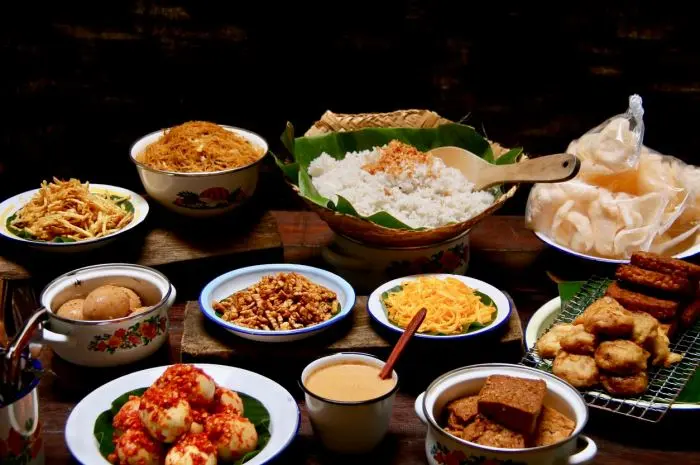
Enjoy a variety of Betawi specialties rich in flavor and history, from kerak telor to soto tangkar, these traditional dishes are ready to rock your tongue.
The Betawi people are the indigenous people who inhabit Jakarta, the capital city of Indonesia. The richness of Betawi culture is manifested in various things, including their unique and diverse cuisine.
Not only about taste, Betawi cuisine combines influences from various cultures such as Arabic, Chinese, Indian, and Dutch, reflecting the city’s long history as a meeting place for various tribes and nations.
Here are 10 Typical Betawi Foods that must be tasted if you want to understand more about Betawi culinary culture.
1. Egg Crust
Kerak telor is a Betawi culinary icon that usually appears at Jakarta’s festivals and cultural events. Made from sticky rice mixed with duck or chicken eggs, ebi (dried shrimp), and roasted grated coconut, this food is cooked using traditional methods using charcoal.
The result is a crunchy texture and a unique savory taste. It would not be complete if you visited Jakarta without tasting the legendary egg crust.
2. Soto Betawi
Soto Betawi is one of the variants of Indonesian soto which is famous for its savory coconut milk sauce. Usually made with beef or offal, soto Betawi is served with sliced tomatoes, crackers, and sprinkled with fried onions.
Spices such as cloves, cardamom, and nutmeg provide a distinctive aroma, making soto Betawi the right choice to be enjoyed with rice or lontong. The rich taste of the broth and tender meat make this dish satisfying to the taste buds.
3. Crocodile Bread
In Betawi culture, crocodile bread is a symbol of loyalty presented at the wedding procession. This bread is shaped like a crocodile with the hope that the bride and groom will always be loyal to each other.
In addition to its philosophical meaning, crocodile bread also has a sweet taste with a soft texture.
Now, variations of crocodile bread filled with chocolate, cheese, or jam add to its deliciousness. Crocodile bread is one of the unique souvenirs from Jakarta that is not only delicious but also full of meaning.
4. Betawi Pickles
Betawi pickles are a refreshing dish that is perfect for hot weather. Consisting of fresh vegetables such as cabbage, carrots, lettuce, and bean sprouts, these pickles are served with a spicy and sour peanut sauce made from chili, sugar, and vinegar.
The fresh and spicy sensation of Betawi pickles is very delicious and is often sought after by culinary lovers, especially because of the uniqueness of the sour-sweet-spicy flavors that blend perfectly.
5. Betawi Steamed Rice
Betawi uduk rice is famous as a favorite breakfast in Jakarta. Rice cooked with coconut milk and spices such as bay leaves, lemongrass, and pandan leaves, resulting in savory and fragrant rice.
Usually served with various side dishes such as fried chicken, balado eggs, stir-fried tempeh, and peanut sauce. Additional side dishes such as fried vermicelli or jengkol stew provide more enjoyment, making uduk rice a dish rich in flavor.
6. Stewed Jengkol
Semur jengkol is a unique Betawi dish that may be a little “daring” for some. Jengkol that has been processed in such a way that it is not too smelly, is cooked with sweet and savory semur spices.
Usually served with white rice, this dish has a chewy texture with a mouth-watering taste. Despite its strong aroma, jengkol stew remains a favorite for those who enjoy food with a distinctive Betawi taste.
7. Cork
Gabus pucung is a dish of snakehead fish cooked in a distinctive black sauce. The black color comes from kluwek (pucung), an ingredient that is also used in Javanese rawon.
This dish has a refreshing savory and sour taste, making it a unique menu that is not easily found in other regions. Gabus pucung is a perfect example of Betawi culinary richness that uses local ingredients with different flavors.
8. Babanci Vegetables
Babanci vegetables are one of the Betawi dishes that are starting to become rare and hard to find. The name “babanci” is probably taken from the Chinese Peranakan term “Baba-Enci,” which refers to the influence of Chinese culture on this dish.
This vegetable has a rich spice sauce and a strong aroma, resembling curry but does not contain vegetables like most vegetable dishes.
Babanci vegetables are often served at special events, such as big days or traditional ceremonies, because the process of making it is quite complicated.
9. Ketoprak
Ketoprak is a typical Betawi dish made from fried tofu, bean sprouts, rice vermicelli, and ketupat or lontong, drizzled with a soft and savory peanut sauce.
Usually served with cucumber, crackers, and fried shallots. Ketoprak is easily found in various corners of Jakarta and is very popular as a practical breakfast or lunch menu. Its simple yet delicious taste makes ketoprak a favorite of the people of Jakarta.
10. Soto Tangkar
Soto tangkar is a Betawi soto that uses beef ribs as the main ingredient. With thick coconut milk sauce and abundant spices, soto tangkar has a rich savory taste and a tempting aroma.
Served with accompaniments such as crackers, tomatoes, and fried onions, this soto is perfect to eat in cold weather or to warm the body.
Betawi cuisine offers a diverse and profound taste experience. From the savory kerak telor to the rich soup of soto tangkar, each dish carries the story and history of the multicultural Betawi people.
Combining Chinese, Arabic, Indian, and Dutch cultural influences, Typical Jakarta Food not only tantalizes the tongue but also reveals the long journey of Jakarta as a center of trade and cultural confluence.
Enjoy the richness of Betawi cuisine and discover the unique taste and unforgettable historical value in each dish.